



The Digital Arrest Trap: Bhopal Couple Defrauded of ₹37.60 Lakh
A retired couple from Bhopal was allegedly trapped in a “Digital Arrest” scam by fraudsters posing as Mumbai Police officers. Using forged documents, video calls and threats of arrest, the scammers pressured them into transferring ₹37.60 lakh.
Listen to this article
Text-to-speech is not available in this browser.
Date of Incident: 30 April 2026
1. History of the Victims: Avinash Kakkar and his wife, Shashi Kakkar, residents of the Arera Colony area of Bhopal, became victims of a digital arrest scam. Avinash Kakkar is a retired officer and was living with his wife. At the end of April 2026, unknown individuals contacted him on his phone. The fraudsters identified themselves as Mumbai Police officers and made the couple believe that they were involved in a serious legal case.
2. Series of Incidents: On the night of 30 April 2026, Avinash
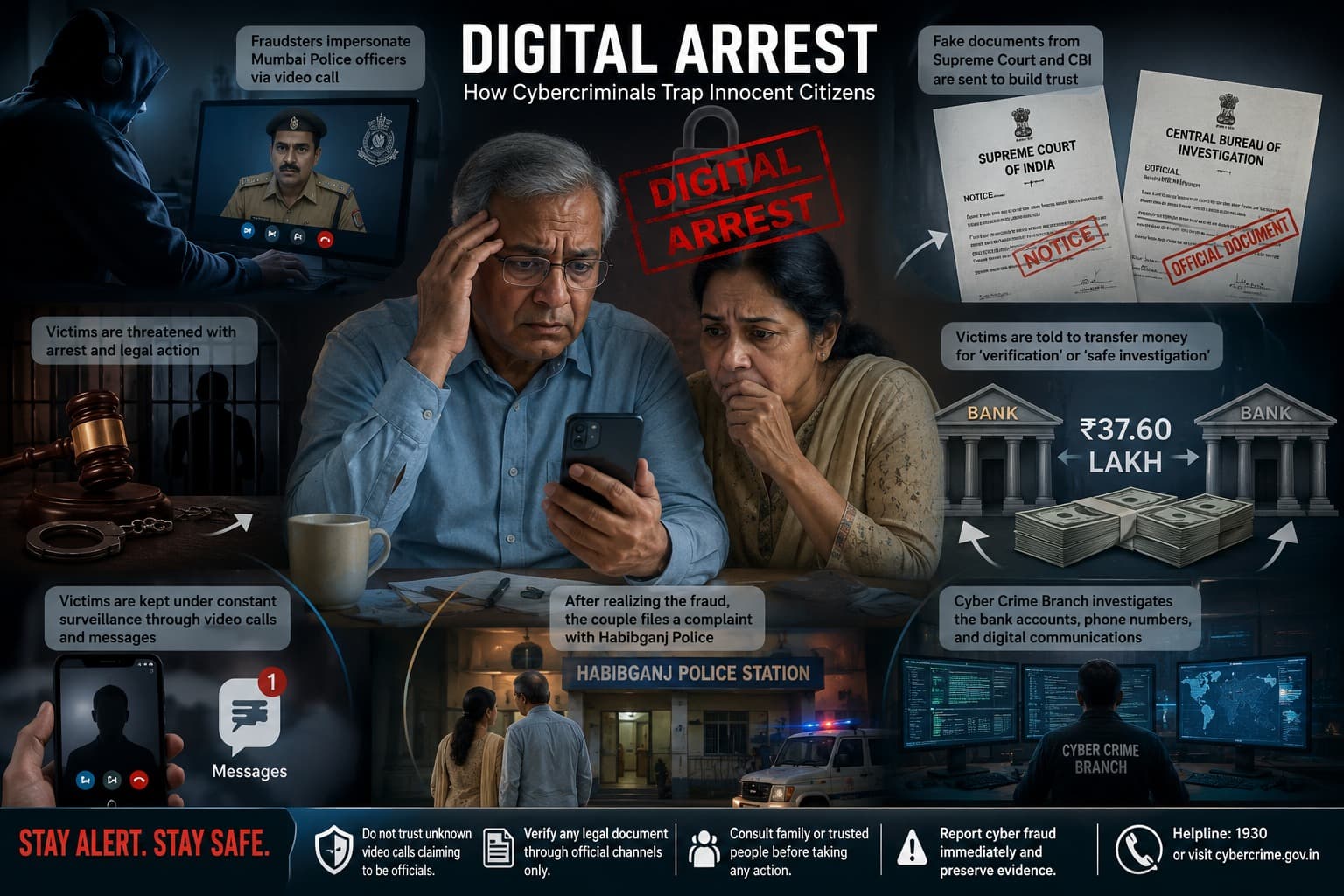
Kakkar received a video call through a messaging service. The callers claimed to be Mumbai Police officers and accused him of having suspicious transactions in his bank accounts. They frightened him by warning of serious legal action and possible arrest. The fraudsters then kept him under their control through continuous video calls and messages in the name of a “digital arrest.” The fraudsters instructed the couple to transfer the money in their bank accounts to accounts specified by them, claiming that the transfer was required for “verification” or a secure investigation. To make the process appear genuine, they also sent forged documents in the names of the Supreme Court and the Central Bureau of Investigation. Under pressure from the fraudsters, the couple transferred a total of ₹37.60 lakh to the bank accounts specified by them. The reports also mention transactions involving Federal Bank and IndusInd Bank. The fraudsters continuously kept the couple in contact and attempted to prevent them from communicating with other people. Throughout the incident, the couple remained under severe psychological pressure. Eventually, after the incident came to light, the couple approached Habibganj Police, and an investigation was initiated.
3. Methodology Used by the Fraudsters:
The cybercriminals primarily used impersonation of government officials as their method of fraud. They falsely presented themselves as Mumbai Police officers and created fear of legal action and arrest in the minds of the victims. They maintained control over the victims through video calls and continuous messages. To make the fraud appear more credible, the fraudsters prepared and sent forged documents using the names of institutions such as the Supreme Court and the Central Bureau of Investigation. They then falsely claimed that suspicious transactions had taken place in the victims' bank accounts and forced them to transfer money under the pretext of “verification.” Thus, impersonation, forged documents, technology, and financial pressure were used together as part of the scam.
4. Emotional Factors Exploited:
The fraudsters extensively exploited the victims' fear of legal consequences. They created psychological pressure by warning them about possible arrest and investigation in connection with a serious criminal case. The fraudsters also presented themselves as police officers to make their instructions appear official and legitimate. By sending forged documents in the names of the Supreme Court and the Central Bureau of Investigation, they attempted to convince the victims that genuine legal proceedings were taking place against them. Continuous video calls, messages, and instructions not to contact other people reduced the victims' ability to independently verify the situation.
5. Impact:
The digital arrest scam resulted in a total financial loss of ₹37.60 lakh for the couple. In addition to the financial loss, they experienced significant psychological pressure and fear. Following the incident, Habibganj Police registered a case and began an investigation. The Cyber Crime Branch is examining the bank accounts into which the money was transferred, the telephone numbers used in the fraud, and the digital communications involved. The investigation aims to identify and trace the individuals involved in the scam.
6. Solutions to Stay Safe:
If anyone contacts you by telephone or video call and claims to be a police officer, a Central Bureau of Investigation official, or another government official, do not trust the claim immediately. If someone threatens arrest, investigation, or legal action and demands money or bank account information, do not make any financial transaction. Government or court-related documents received through messaging services should not be automatically considered genuine. Their authenticity should be independently verified through official channels. In such situations, do not make decisions under fear or pressure. Contact family members, a trusted person, or the relevant official authority for verification. Being kept continuously on video calls in the name of a “digital arrest” can be a serious warning sign of cyber fraud. If you experience a suspicious financial transaction or become a victim of cyber fraud, report the incident to the police or cybercrime authorities immediately. Preserve all available evidence, including telephone numbers, messages, photographs, documents, and details of financial transactions.
What to do immediately
Disconnect from the scammer
End the call or chat. Do not continue because the scammer sounds official or angry.
Call 1930 if money moved
The first hour gives the best chance of freezing transfers.
Save evidence
Keep transaction IDs, phone numbers, links, screenshots, and call records.
Protection checklist
- Never share OTPs, PINs, passwords, or screen-sharing access.
- Verify urgent claims using official phone numbers only.
- Talk to a trusted person before moving money under pressure.
- Report suspicious calls and messages quickly.